
What Are Adaptive Living Skills for Children?
September 9, 2026
A child who can tell you they are thirsty but cannot get a cup, pour water safely, or ask for help is communicating an important need. The next step is building the practical abilities that make daily life more manageable. So, what are adaptive living skills? They are the everyday skills people use to care for themselves, participate at home and school, communicate needs, and move through routines with as much independence as possible.
For autistic children and children with other developmental disabilities, these skills may develop in a different order or require more direct teaching and practice. This is not a measure of a child’s intelligence, personality, or potential. It simply helps families and clinicians identify where support can make routines less stressful and more meaningful.
What Are Adaptive Living Skills?
Adaptive living skills are functional abilities used in real-life situations. They include personal care, communication, safety awareness, household participation, social functioning, and community readiness. The exact skills that matter most depend on a child’s age, strengths, environment, and family priorities.
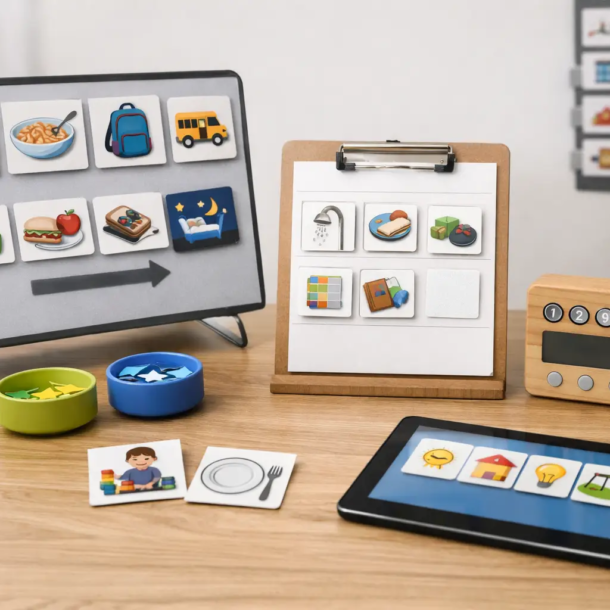
For a young child, an adaptive skill may be washing hands after using the bathroom or putting shoes on before leaving the house. For an older child, it may include packing a backpack, following a visual schedule, ordering food, managing a simple chore, or asking for a break when overwhelmed.
These skills are sometimes called daily living skills, self-help skills, or adaptive behavior skills. The terms overlap, but adaptive living skills usually describe the broader ability to respond effectively to the demands of everyday life. A child may need support in one area and show strong independence in another.
The Main Areas of Adaptive Functioning
Adaptive skills are often grouped into several areas. Looking at these areas together gives a clearer picture than focusing on a single task.
Personal Care and Daily Routines
Personal care includes eating, dressing, toileting, bathing, grooming, brushing teeth, and bedtime routines. These tasks can have many small steps. For example, getting dressed may involve choosing appropriate clothing, orienting each item correctly, fastening buttons or zippers, and putting dirty clothes in the hamper.
Some children need help with the physical steps. Others understand the steps but benefit from reminders, a visual routine, or more time to transition. The right support depends on why the task is difficult, not just whether it gets completed.
Communication and Self-Advocacy
Communication is an adaptive skill because it helps a child meet needs and participate in daily life. This can include using spoken language, gestures, sign language, pictures, a communication device, or another reliable method to request help, make choices, answer questions, and express discomfort.
Self-advocacy builds on communication. A child who learns to say, sign, or select “break,” “help,” “too loud,” or “all done” has a practical way to navigate challenging situations. These skills can reduce frustration while giving the child more control and dignity in their routines.
Home and School Participation
Children contribute to daily life in age-appropriate ways. At home, that may look like putting toys away, placing napkins on the table, feeding a pet with supervision, or helping sort laundry. At school, it may involve opening a lunch container, following classroom directions, organizing supplies, or moving from one activity to the next.
The goal is not perfection or making a child appear independent before they are ready. It is creating meaningful opportunities for participation while providing the amount of support that helps the child succeed.
Social and Emotional Regulation Skills
Adaptive functioning also includes skills that help children engage with other people and manage everyday emotions. Waiting briefly, taking turns, responding to greetings, recognizing when they need space, and using a calming strategy are all examples.
Emotional regulation is especially important because many daily living tasks become harder when a child is tired, anxious, frustrated, or facing an unexpected change. A plan might include teaching a child to request a break, use headphones in noisy settings, check a visual schedule, or practice a transition routine before a busy day.
Safety and Community Skills
Safety skills vary by age and family needs. Early goals may include stopping when an adult says “wait,” holding an adult’s hand in a parking lot, or learning that hot surfaces can hurt. As children grow, goals may expand to identifying trusted adults, understanding personal information, following simple community rules, and practicing safer ways to navigate public spaces.
Community skills can also include waiting in line, shopping with a caregiver, carrying an item to the register, or participating in a family outing. These are often best learned gradually in the settings where they will be used.
Why Adaptive Living Skills Matter
Daily routines happen repeatedly. When a child gains even one useful skill, such as independently putting on a backpack or asking for a snack, that progress can make a real difference for the child and family.
Adaptive skills support quality of life because they help children take part in activities that matter to them. Greater independence can create more opportunities for play, school participation, family routines, and community experiences. It can also help caregivers shift from doing every step for their child to teaching, encouraging, and celebrating progress.
At the same time, independence should never mean withdrawing needed support. Some children will always benefit from accommodations, assistive communication, visual supports, sensory tools, or help from trusted adults. Success means finding supports that allow the child to participate safely and comfortably, not expecting every child to perform every task alone.
How ABA Therapy Can Build Adaptive Living Skills
Applied Behavior Analysis, or ABA therapy, can help teach adaptive living skills through individualized, evidence-based instruction. A behavior analyst begins by learning about the child’s current abilities, routines, communication style, interests, and barriers to participation. Family input is essential because parents and caregivers know which moments are most challenging and which changes would be most helpful.
A larger routine is often broken into manageable steps. This approach is called task analysis. For handwashing, steps may include turning on the water, wetting hands, getting soap, rubbing hands together, rinsing, turning off the faucet, and drying hands. Teaching can start with the step that is most appropriate for the child.
Therapists may use modeling, prompting, visual supports, practice opportunities, and positive reinforcement. Prompts are then adjusted over time when appropriate so the child has more chances to respond independently. Progress is tracked to help the treatment team understand what is working and where a goal may need to be modified.
Importantly, adaptive skills should be practiced in natural settings whenever possible. A child who learns to request a snack during a therapy activity also needs opportunities to use that skill in the kitchen, at school, and with caregivers. This is known as generalization. It helps skills become useful outside of a single room, person, or routine.
Choosing Goals That Fit Your Child and Family
A useful adaptive goal is meaningful, specific, and realistic. Rather than beginning with a broad goal such as “be more independent,” a family and clinical team might focus on one routine: your child will put dirty clothes in the hamper after changing, use a visual checklist to pack for school, or request help before becoming frustrated with a difficult container.
Priorities can differ from family to family. One parent may need support with morning routines before work. Another may be most concerned about toileting, safe transitions in the community, or communication during meals. There is no universal checklist that matters equally for every child.
It also helps to consider the effort a task requires. A child may be able to brush their teeth independently on a calm weekend morning but need reminders when the family is rushing out the door. That does not erase their progress. It shows that adaptive functioning can change based on fatigue, sensory needs, setting, and the demands of the moment.
Ways Parents Can Support Skill Building at Home
Consistency matters more than long practice sessions. Build practice into routines that already happen, such as having your child place their cup in the sink after a meal or choose the next item on a bedtime visual schedule. Give enough wait time before stepping in. A few extra seconds can allow a child to process the instruction and attempt the next step.
Clear, simple language is often helpful. Instead of repeating several directions, try one concrete cue, such as “Shoes on,” paired with a picture or gesture if that support works for your child. Notice effort as well as completion. Specific encouragement such as “You pulled your zipper up” tells a child exactly what they did well.
When a routine feels difficult, start smaller. If brushing teeth for two minutes is not yet realistic, practice holding the toothbrush, adding toothpaste, or brushing for a short, successful interval. Small gains are still gains, and they create a foundation for the next step.
At Bhavioral Corporation, individualized ABA programs can include adaptive goals that reflect a child’s strengths and a family’s real routines. The most meaningful progress often starts with one ordinary moment: a child expressing a need, completing one more step, or joining the family routine with greater confidence.