
What Is Caregiver Training in ABA Therapy?
July 1, 2026
A child may do beautifully in therapy and still struggle at home during dinner, bedtime, or getting ready for school. That gap is exactly why families ask, what is caregiver training in applied behavior analysis therapy? In simple terms, it is a structured part of ABA that teaches parents and other caregivers how to support their child’s goals in everyday life, with guidance from a qualified clinician.
Caregiver training is not about turning parents into therapists. It is about helping families feel more confident, more prepared, and less alone. When strategies are carried into real routines at home and in the community, children have more chances to practice skills where they actually matter.
What is caregiver training in applied behavior analysis therapy?
Caregiver training in applied behavior analysis therapy is a planned, evidence-based process where a Board Certified Behavior Analyst, or another qualified ABA professional under appropriate supervision, teaches caregivers how to use specific strategies with their child. Those strategies are based on the child’s treatment goals, current skill level, and daily challenges.
That may include learning how to encourage communication, support smoother transitions, build play and social interaction, strengthen daily living skills, or respond to behaviors in a consistent way. The training usually focuses on practical situations the family faces every day, not abstract theory.
A strong caregiver training plan is individualized. One family may need help with morning routines and reducing unsafe behavior. Another may want support with toilet training, language development, or helping a child tolerate community outings. The content should match the child and the family, not a generic checklist.
Why caregiver training matters in ABA therapy
ABA works best when skills are not limited to one room, one therapist, or one time of day. Children learn more effectively when the adults around them respond in similar, supportive ways. That consistency can reduce confusion and create more opportunities for success.
This is one of the biggest reasons caregiver training matters. A child may learn to request a snack during a therapy session, but if that skill is not encouraged at home, it may not stick. The same is true for waiting, following directions, getting dressed, brushing teeth, or handling changes in routine.
Caregiver training also helps families understand the why behind a strategy. When parents know what a behavior may be communicating and how to respond calmly, they are often better able to support progress without feeling like they are guessing. That can lower stress for the whole household.
There is also a practical side. Children spend far more time with family than with any therapy team. Even excellent direct therapy has limits if caregivers do not have support using the same principles in real life.
What caregiver training usually includes
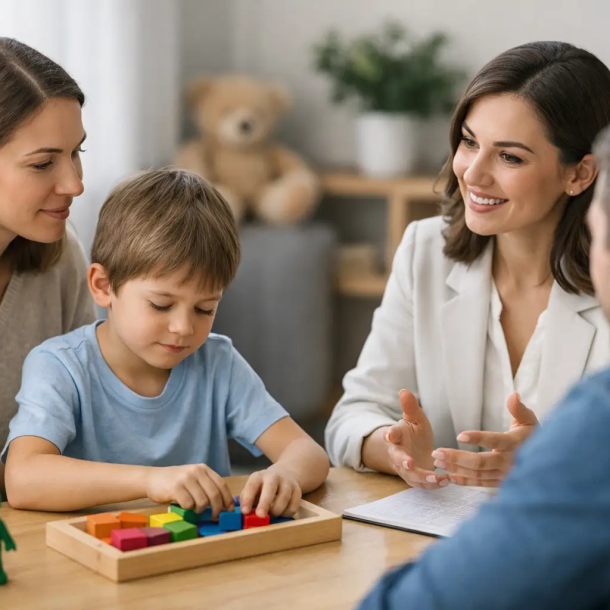
Most caregiver training sessions combine explanation, modeling, practice, and feedback. A clinician might first explain the target skill and why it matters. Then they may demonstrate a strategy, watch the caregiver try it, and offer coaching in the moment.
Common topics include how to give clear instructions, how to reinforce desired behavior, how to prompt a child without doing too much for them, and how to respond when a child becomes frustrated. Training may also cover communication systems, functional play, toileting routines, feeding support, sleep-related routines, or safety skills, depending on the treatment plan.
Good training is specific. Instead of saying, “Use reinforcement more,” a clinician may help a parent identify exactly what their child enjoys, when to deliver praise or access to a preferred item, and how to make that reinforcement meaningful. Small adjustments like timing, wording, and consistency can make a real difference.
What a caregiver training session looks like
A session can look different depending on the child’s age, goals, and setting. Sometimes the parent meets with the clinician while the child is present so everyone can practice in the moment. Other times, part of the session may focus on reviewing progress, problem-solving barriers, or preparing for an upcoming challenge, such as a schedule change or a school break.
In a center-based program, the clinician may review what the child is learning in therapy and show the caregiver how to carry those same skills into home routines. In home-based support, training may happen right in the middle of natural routines like meals, bath time, play, or transitions.
The best sessions feel collaborative. Parents should have space to ask questions, talk honestly about what is working, and say when a strategy does not feel realistic. A clinically sound plan still has to fit the family’s daily life.
What caregiver training is not
Families sometimes worry that caregiver training means they are being judged or blamed. It should never feel that way. This service is not a test of parenting, and it is not a sign that a parent has done something wrong.
It is also not a lecture filled with technical jargon. Effective ABA providers know that overwhelmed families need clear, respectful guidance. If a strategy cannot be understood and used during real routines, it probably needs to be simplified.
Caregiver training is also not about expecting parents to do hours of formal therapy every night. For many families, progress comes from learning how to handle daily moments more effectively. A short practice opportunity during snack time or a more consistent bedtime routine can be more helpful than trying to recreate a full therapy session at home.
Benefits for children and families
When caregiver training is done well, children may have more opportunities to practice communication, social interaction, self-help, and behavior regulation across settings. That can support generalization, which means a skill shows up with different people and in different places.
Families often benefit too. Parents may feel more confident handling challenging moments, more aware of what their child is trying to communicate, and more involved in treatment decisions. For many caregivers, that sense of understanding matters just as much as the skill-building itself.
There are trade-offs, though. Progress is not always immediate, and training can feel hard at first, especially if a family is already balancing work, school, and other responsibilities. Some strategies need time and repetition before they feel natural. It is normal for learning to happen gradually.
How to know if caregiver training is effective
Effective caregiver training should feel relevant, respectful, and measurable. The goals should connect to real family priorities, not just clinic convenience. If mealtimes are the biggest struggle at home, that issue should not be ignored in favor of a less urgent goal.
You should also see active coaching, not just handouts or broad advice. A strong clinician explains the strategy, demonstrates it when appropriate, watches the caregiver use it, and gives supportive feedback. Families deserve guidance they can actually apply.
Another sign of quality is progress monitoring. That does not mean every session feels dramatic, but there should be a clear sense of what is being targeted and whether the child and caregiver are moving forward. Sometimes the plan needs to be adjusted, and that is part of good care, not a failure.
Questions parents can ask
If you are starting ABA services or reviewing a treatment plan, it helps to ask how caregiver training will be included. You can ask what goals will be addressed, how often training is recommended, who will provide it, and how success will be measured.
It is also reasonable to ask how the team will tailor strategies to your child’s routine, communication style, and behavior patterns. Families in Broward County, Palm Beach County, or Lee County may also want to ask whether training can be coordinated around work schedules or center-based services, especially when consistency at home is a major concern.
The right provider should welcome these questions. Parent education is not an extra feature in quality ABA care. It is part of helping children make progress in the settings where they live, play, and grow.
What is caregiver training in applied behavior analysis therapy really trying to achieve?
At its core, caregiver training in applied behavior analysis therapy is trying to make progress more usable in everyday life. The goal is not perfect behavior. The goal is a child who can communicate needs more clearly, participate more fully in family routines, and build greater independence over time.
For caregivers, the goal is often just as meaningful. It is the relief of knowing what to do when your child is struggling. It is having a plan that feels practical. It is being supported by professionals who respect your role and help you carry skills beyond the therapy session.
If you are considering ABA, caregiver training is worth paying attention to. A thoughtful, family-centered program does more than work with your child. It helps you feel equipped for the real moments that fill your day, one routine at a time.