

12 Visual Schedule Ideas for Everyday Routines
September 8, 2026
A rushed morning can turn a simple request like “get dressed” into a string of repeated prompts, frustration, and missed steps. Visual schedule ideas give autistic children a clearer way to understand what is happening now, what comes next, and when a routine is finished. For many families, that predictability can reduce stress while supporting communication, independence, and confidence.
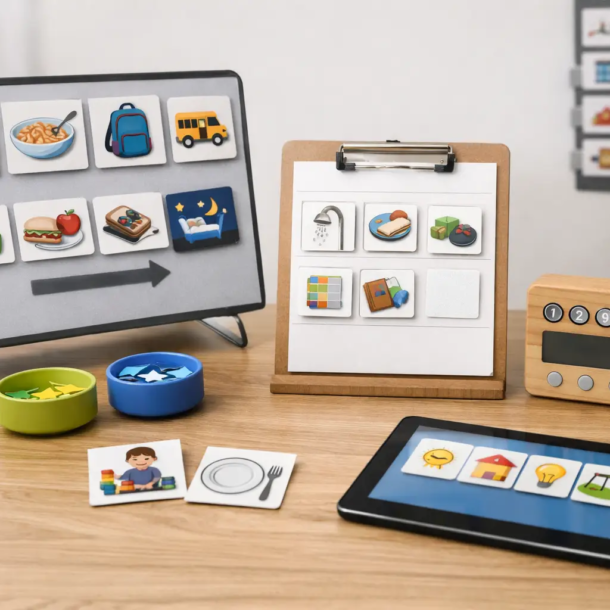
A visual schedule is not meant to make a child follow a rigid routine every minute of the day. It is a practical support that turns spoken directions into information a child can see. Depending on the child’s needs, it may use photos, picture symbols, written words, objects, or a combination of these tools.
Why visual schedules can support daily life
Many children benefit from knowing the order of activities, but this can be especially helpful for children who have difficulty processing verbal language, managing unexpected changes, or moving from a preferred activity to a less preferred one. A schedule makes expectations visible instead of requiring a child to remember several spoken steps at once.
In ABA therapy, visual supports may be incorporated into an individualized treatment plan when they match a child’s strengths and goals. A behavior analyst may use them to teach self-care routines, transitions, play skills, or participation in structured activities. The goal is not simply compliance. It is to help the child understand routines and participate as independently as possible.
The right format depends on the child. Some children respond best to a real photo of their own toothbrush or backpack. Others understand simple icons, while readers may prefer a written checklist. A schedule should be easy for the child to use, not visually impressive for adults.
12 visual schedule ideas for home and community
Start with one routine that is already challenging or requires frequent reminders. It is usually better to make one useful schedule than to create several systems that are difficult to maintain.
- Morning routine board. Show the steps for waking up, using the bathroom, getting dressed, eating breakfast, brushing teeth, putting on shoes, and leaving. Place it where the routine occurs, such as the bedroom or kitchen.
- After-school schedule. A child may benefit from seeing a predictable order: arrive home, put away backpack, have a snack, complete homework or a learning activity, play, and begin the evening routine. This can make the transition from school to home feel more manageable.
- Bedtime sequence. Photos or pictures for pajamas, bathroom, teeth brushing, story, lights out, and sleep can reduce repeated verbal reminders. Keep the sequence realistic for your family rather than adding steps that do not happen consistently.
- Toothbrushing task strip. Break one skill into small actions: get toothbrush, add toothpaste, brush top teeth, brush bottom teeth, spit, rinse, and put materials away. This is often more helpful than a general picture labeled “brush teeth.”
- Getting-ready-for-school checklist. Include clothing, lunchbox, water bottle, backpack, and shoes. A child who can check each item independently may need fewer adult prompts during a busy departure.
- First-then board. This simple two-part visual is useful when a full schedule feels overwhelming. For example: “First shoes, then playground” or “First two math problems, then blocks.” The “then” activity should be meaningful to the child and presented honestly.
- Choice schedule for play. Offer two or three visual choices for a break or leisure time, such as drawing, building toys, music, or outdoor play. Choice-making supports communication and can give children an appropriate way to express preferences.
- Mealtime routine. Use visuals for wash hands, sit at the table, eat, drink, wipe hands, and clear dish. Focus on participation rather than expecting every child to complete every step right away.
- Community outing schedule. Before a grocery trip, appointment, restaurant visit, or family event, show the expected sequence: get in the car, arrive, complete the activity, choose a snack or preferred activity, and go home. If plans may change, include a simple “change” card.
- Transition countdown. A small schedule showing “five more minutes,” “clean up,” and “next activity” can help children prepare for a transition. A timer may be helpful for some children, but it should be paired with a clear visual of what happens when time ends.
- Homework or table-work schedule. Show a limited number of tasks, followed by a planned break. For instance, reading, worksheet, break, and game. Keep work periods achievable so the schedule builds success instead of becoming a source of pressure.
- Weekly family calendar. For children who understand broader time concepts, a calendar can show school days, therapy appointments, family visits, special events, and weekends. Use it as an opportunity to talk about upcoming changes before they happen.
How to create visual schedules that a child will use
Begin by observing the routine as it actually happens. Write down each step, including the small ones adults often do automatically. If “get ready for bed” has six steps for your child, make those six steps visible rather than using one broad bedtime picture.
Use the simplest level of detail that helps. A child learning to complete a multistep activity may need each action shown separately. Another child may only need three pictures: bathroom, pajamas, bed. Too many visuals can be distracting, so adjust based on how the child responds.
Place the schedule at eye level and near the activity when possible. A morning routine chart in a hallway may be less effective than a small strip in the bathroom or bedroom. Portable schedules on a clipboard, key ring, or phone can work well for community routines.
Teach the schedule before expecting independent use. At first, an adult may point to the current picture, briefly name the step, and provide help as needed. As the child becomes familiar with the routine, gradually reduce prompts. Praise should be specific and genuine: “You checked your schedule and put your backpack by the door.”
It also helps to show completion. Some children like moving completed pictures into a “finished” pocket, checking off a written list, or turning over cards. Seeing an end point can make a longer routine feel more manageable.
When a schedule is not working
A visual schedule is a support, not a test. If a child avoids it, becomes upset, or seems confused, consider whether the pictures are understandable, the steps are too long, or the routine itself needs to be adjusted. A child may also need more practice, a more motivating finish, or fewer demands at one time.
Avoid using a schedule to remove all flexibility from family life. Unexpected changes happen, and children can learn to cope with them gradually. A “change” card, a short explanation, and a revised schedule can help communicate that plans are different without leaving the child unsure about what comes next.
For children receiving ABA services, share what you are seeing with the clinical team. Parents and therapists can work together to use similar language, images, and routines across settings. This kind of consistency can support skill generalization while still respecting the realities of home, school, and community life.
Small changes can build meaningful independence
You do not need special software, expensive materials, or a perfectly designed board to begin. Printed photos, index cards, sticky notes, and a piece of tape can be enough. What matters most is that the schedule is clear, relevant, and used consistently during a routine that matters to your child.
At Bhavioral Corporation, individualized ABA programs can help families identify supports that fit a child’s communication style, developmental needs, and daily routines. A simple visual today may become the bridge to a child completing more of tomorrow’s routine with confidence.
A rushed morning can turn a simple request like “get dressed” into a string of repeated prompts, frustration, and missed steps. Visual schedule ideas give autistic children a clearer way to understand what is happening now, what comes next, and when a routine is finished. For many families, that predictability can reduce stress while supporting communication, independence, and confidence.
A visual schedule is not meant to make a child follow a rigid routine every minute of the day. It is a practical support that turns spoken directions into information a child can see. Depending on the child’s needs, it may use photos, picture symbols, written words, objects, or a combination of these tools.
Why visual schedules can support daily life
Many children benefit from knowing the order of activities, but this can be especially helpful for children who have difficulty processing verbal language, managing unexpected changes, or moving from a preferred activity to a less preferred one. A schedule makes expectations visible instead of requiring a child to remember several spoken steps at once.
In ABA therapy, visual supports may be incorporated into an individualized treatment plan when they match a child’s strengths and goals. A behavior analyst may use them to teach self-care routines, transitions, play skills, or participation in structured activities. The goal is not simply compliance. It is to help the child understand routines and participate as independently as possible.
The right format depends on the child. Some children respond best to a real photo of their own toothbrush or backpack. Others understand simple icons, while readers may prefer a written checklist. A schedule should be easy for the child to use, not visually impressive for adults.
12 visual schedule ideas for home and community
Start with one routine that is already challenging or requires frequent reminders. It is usually better to make one useful schedule than to create several systems that are difficult to maintain.
- Morning routine board. Show the steps for waking up, using the bathroom, getting dressed, eating breakfast, brushing teeth, putting on shoes, and leaving. Place it where the routine occurs, such as the bedroom or kitchen.
- After-school schedule. A child may benefit from seeing a predictable order: arrive home, put away backpack, have a snack, complete homework or a learning activity, play, and begin the evening routine. This can make the transition from school to home feel more manageable.
- Bedtime sequence. Photos or pictures for pajamas, bathroom, teeth brushing, story, lights out, and sleep can reduce repeated verbal reminders. Keep the sequence realistic for your family rather than adding steps that do not happen consistently.
- Toothbrushing task strip. Break one skill into small actions: get toothbrush, add toothpaste, brush top teeth, brush bottom teeth, spit, rinse, and put materials away. This is often more helpful than a general picture labeled “brush teeth.”
- Getting-ready-for-school checklist. Include clothing, lunchbox, water bottle, backpack, and shoes. A child who can check each item independently may need fewer adult prompts during a busy departure.
- First-then board. This simple two-part visual is useful when a full schedule feels overwhelming. For example: “First shoes, then playground” or “First two math problems, then blocks.” The “then” activity should be meaningful to the child and presented honestly.
- Choice schedule for play. Offer two or three visual choices for a break or leisure time, such as drawing, building toys, music, or outdoor play. Choice-making supports communication and can give children an appropriate way to express preferences.
- Mealtime routine. Use visuals for wash hands, sit at the table, eat, drink, wipe hands, and clear dish. Focus on participation rather than expecting every child to complete every step right away.
- Community outing schedule. Before a grocery trip, appointment, restaurant visit, or family event, show the expected sequence: get in the car, arrive, complete the activity, choose a snack or preferred activity, and go home. If plans may change, include a simple “change” card.
- Transition countdown. A small schedule showing “five more minutes,” “clean up,” and “next activity” can help children prepare for a transition. A timer may be helpful for some children, but it should be paired with a clear visual of what happens when time ends.
- Homework or table-work schedule. Show a limited number of tasks, followed by a planned break. For instance, reading, worksheet, break, and game. Keep work periods achievable so the schedule builds success instead of becoming a source of pressure.
- Weekly family calendar. For children who understand broader time concepts, a calendar can show school days, therapy appointments, family visits, special events, and weekends. Use it as an opportunity to talk about upcoming changes before they happen.
How to create visual schedules that a child will use
Begin by observing the routine as it actually happens. Write down each step, including the small ones adults often do automatically. If “get ready for bed” has six steps for your child, make those six steps visible rather than using one broad bedtime picture.
Use the simplest level of detail that helps. A child learning to complete a multistep activity may need each action shown separately. Another child may only need three pictures: bathroom, pajamas, bed. Too many visuals can be distracting, so adjust based on how the child responds.
Place the schedule at eye level and near the activity when possible. A morning routine chart in a hallway may be less effective than a small strip in the bathroom or bedroom. Portable schedules on a clipboard, key ring, or phone can work well for community routines.
Teach the schedule before expecting independent use. At first, an adult may point to the current picture, briefly name the step, and provide help as needed. As the child becomes familiar with the routine, gradually reduce prompts. Praise should be specific and genuine: “You checked your schedule and put your backpack by the door.”
It also helps to show completion. Some children like moving completed pictures into a “finished” pocket, checking off a written list, or turning over cards. Seeing an end point can make a longer routine feel more manageable.
When a schedule is not working
A visual schedule is a support, not a test. If a child avoids it, becomes upset, or seems confused, consider whether the pictures are understandable, the steps are too long, or the routine itself needs to be adjusted. A child may also need more practice, a more motivating finish, or fewer demands at one time.
Avoid using a schedule to remove all flexibility from family life. Unexpected changes happen, and children can learn to cope with them gradually. A “change” card, a short explanation, and a revised schedule can help communicate that plans are different without leaving the child unsure about what comes next.
For children receiving ABA services, share what you are seeing with the clinical team. Parents and therapists can work together to use similar language, images, and routines across settings. This kind of consistency can support skill generalization while still respecting the realities of home, school, and community life.
Small changes can build meaningful independence
You do not need special software, expensive materials, or a perfectly designed board to begin. Printed photos, index cards, sticky notes, and a piece of tape can be enough. What matters most is that the schedule is clear, relevant, and used consistently during a routine that matters to your child.
At Bhavioral Corporation, individualized ABA programs can help families identify supports that fit a child’s communication style, developmental needs, and daily routines. A simple visual today may become the bridge to a child completing more of tomorrow’s routine with confidence.