
Can ABA Reduce Elopement? A Family-Centered Plan
October 10, 2026
A child moving quickly toward a door, parking lot, pool, or unfamiliar area can turn an ordinary moment into a frightening one. For many families, the question is urgent: can ABA reduce elopement? Applied Behavior Analysis can help by identifying why a child leaves a safe area, teaching safer ways to communicate needs, and building practical routines that support safety across daily life.
Elopement is not a child being “bad” or deliberately trying to worry a parent. It is a behavior with a reason, even when that reason is not immediately clear. A compassionate ABA plan looks beyond the act of running or leaving. It asks what happened before, what the child may be trying to communicate, and what supports can make staying safe easier.
What elopement can look like
Elopement occurs when a child leaves a supervised or safe setting without permission or without an adult’s awareness. It may include leaving a classroom, walking out of the home, moving away from a caregiver in a store, or running ahead in a parking lot. The level of risk depends on the setting, the child’s awareness of danger, and how quickly adults can respond.
Sometimes elopement happens when a child wants access to something preferred, such as an outdoor space, a favorite activity, or a familiar person. In other situations, it may help a child get away from noise, a difficult demand, an uncomfortable social situation, or a change in routine. Some children may be drawn to movement, water, or a specific location. The same behavior can serve different purposes at different times, which is why individualized assessment matters.
Can ABA reduce elopement behavior?
ABA therapy may reduce elopement by replacing unsafe leaving with skills that meet the same need more safely. The goal is not simply to stop a child from moving. It is to help the child communicate, cope, transition, and participate in everyday routines with greater safety and independence.
A Board Certified Behavior Analyst or qualified clinical team begins by gathering information. Caregivers may be asked when elopement happens, where it happens, what occurs right before it, and what usually follows. Direct observation and data collection can help clarify patterns. For example, a child who runs from the table after a difficult task may need a way to request help or a break. A child who heads for the front door may need a predictable, supported way to ask to go outside.
This process is often called a functional behavior assessment. It does not label a child or assume there is one simple explanation. Instead, it helps the care team create a treatment plan based on the child’s individual communication, sensory, learning, and safety needs.
Teaching a safer replacement skill
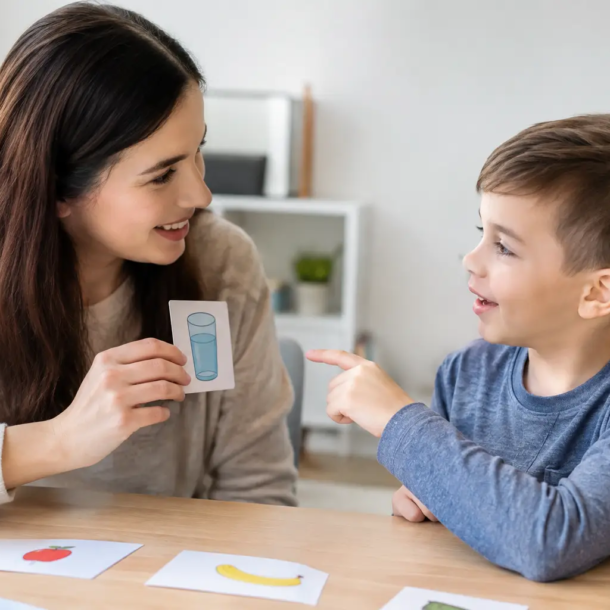
A strong ABA plan teaches what to do instead of eloping. The replacement skill should be simple, meaningful, and practical for the child to use in the moment. Depending on the child’s current abilities, this could include saying “break,” handing over a picture card, using a communication device, asking “outside please,” holding an adult’s hand, or waiting at a marked location.
Teaching happens before a high-risk moment whenever possible. A therapist may practice stopping at a doorway, responding to a caregiver’s call, walking beside an adult, or asking for a break during calm, structured activities. Success is acknowledged right away so the child learns that safe communication works.
For some children, early lessons may be very small: pausing for one second at the door, turning toward an adult when their name is called, or placing a hand on a cart in a store. These small steps can matter because they create a foundation for more independent safety skills over time.
Making the environment safer while skills grow
Skill building takes time. Environmental safety supports are not a failure or a replacement for therapy. They are an essential part of protecting a child while new routines are being learned.
Families may work with their clinical team to consider door alarms, secure locks placed out of a child’s reach when appropriate, visual stop signs, clear family routines, and close supervision during known high-risk times. Schools, childcare programs, and other caregivers may also benefit from knowing the child’s safety plan, with the family’s consent.
Environmental changes should match the child and the setting. A visual reminder at one doorway may help one child but have little effect for another. Likewise, a safety measure that works at home may need to be adjusted for a busy community setting. ABA can help families test strategies thoughtfully and use data to see whether they are making a meaningful difference.
What an individualized elopement plan may include
The most helpful plans are specific enough for everyday use. They recognize that a child may need different supports at home, school, therapy, and in the community. Rather than relying on a single response, an ABA team may combine several approaches:
- Teaching functional communication, including how to request a break, help, attention, or access to a preferred activity.
- Practicing transitions with visual schedules, countdowns, first-then language, and clear expectations.
- Building safety responses, such as stopping, waiting, coming when called, or staying with a trusted adult.
- Adjusting difficult tasks so the child can experience success while gradually developing tolerance for demands.
- Reinforcing safe choices consistently and in ways that are meaningful to the child.
- Coaching caregivers so the plan can be used during real family routines, not only in therapy sessions.
A plan should also consider what adults will do if elopement occurs. Caregivers need a calm, clear response that prioritizes immediate safety. This may include knowing which adult is responsible for supervision, keeping important contact information available, and deciding ahead of time how to communicate with other caregivers or school staff. When a child is in immediate danger or cannot be located, families should contact emergency services right away.
Why punishment alone does not solve the problem
It can be tempting to focus only on preventing a child from leaving or responding after it happens. However, consequences alone do not teach the child how to handle the next difficult moment. If elopement helps a child escape overwhelming noise, for example, the child still needs an appropriate way to request space.
Ethical ABA care focuses on proactive teaching, positive reinforcement, and dignity. A clinical team may reduce situations that are likely to trigger elopement while helping the child gain the skills to handle those situations more successfully. This approach recognizes safety as a shared responsibility between the child, caregivers, therapists, educators, and the environment.
Progress is more than fewer incidents
A decrease in elopement can be an important outcome, but families may notice other meaningful changes first. A child may begin looking toward a caregiver before moving away, accept a transition with less distress, use a break card, or wait briefly at the front door. These are signs that the child is developing safer options.
Progress is rarely perfectly linear. Travel, illness, school changes, new routines, or sensory demands can make safety skills harder to use. Reviewing data regularly helps the care team adjust goals and supports rather than expecting a child to manage every situation in exactly the same way.
Generalization is especially important. A child who safely waits at a therapy center may need separate teaching and practice to use that skill at home, at a grandparent’s house, or in a crowded store. Caregiver involvement helps connect therapy goals to the places and routines that matter most to the family.
When to seek ABA support for elopement
Consider speaking with an ABA provider when elopement is frequent, increasing, difficult to predict, or creating safety concerns at home, school, or in the community. Support can also be helpful when a child has limited ways to communicate needs, becomes distressed during transitions, or has trouble responding to safety directions.
For families in Broward, Palm Beach, and Lee counties, Bhavioral Corporation can help guide the next steps through a compassionate intake process and individualized ABA services. Coverage and out-of-pocket costs depend on each family’s health plan, eligibility, benefits, and authorization requirements, and the intake team can help families understand the process.
A child’s urge to leave a space is a signal worth understanding, not a reason for blame. With safety supports, patient teaching, and a plan that reflects the child’s needs, families can create more opportunities for confidence, connection, and safer participation in daily life.